Adaptive Energy Management System based on Tokenized Energy Profiles
ADAPTIVE ENERGY MANAGEMENT SYSTEM AND METHOD BASED ON THE USE OF TOKENIZED ENERGY PROFILES (TOE)
Applicant: GREEN SKILLS, S.L.U.
Inventor: Alejandro Antonio Díaz González
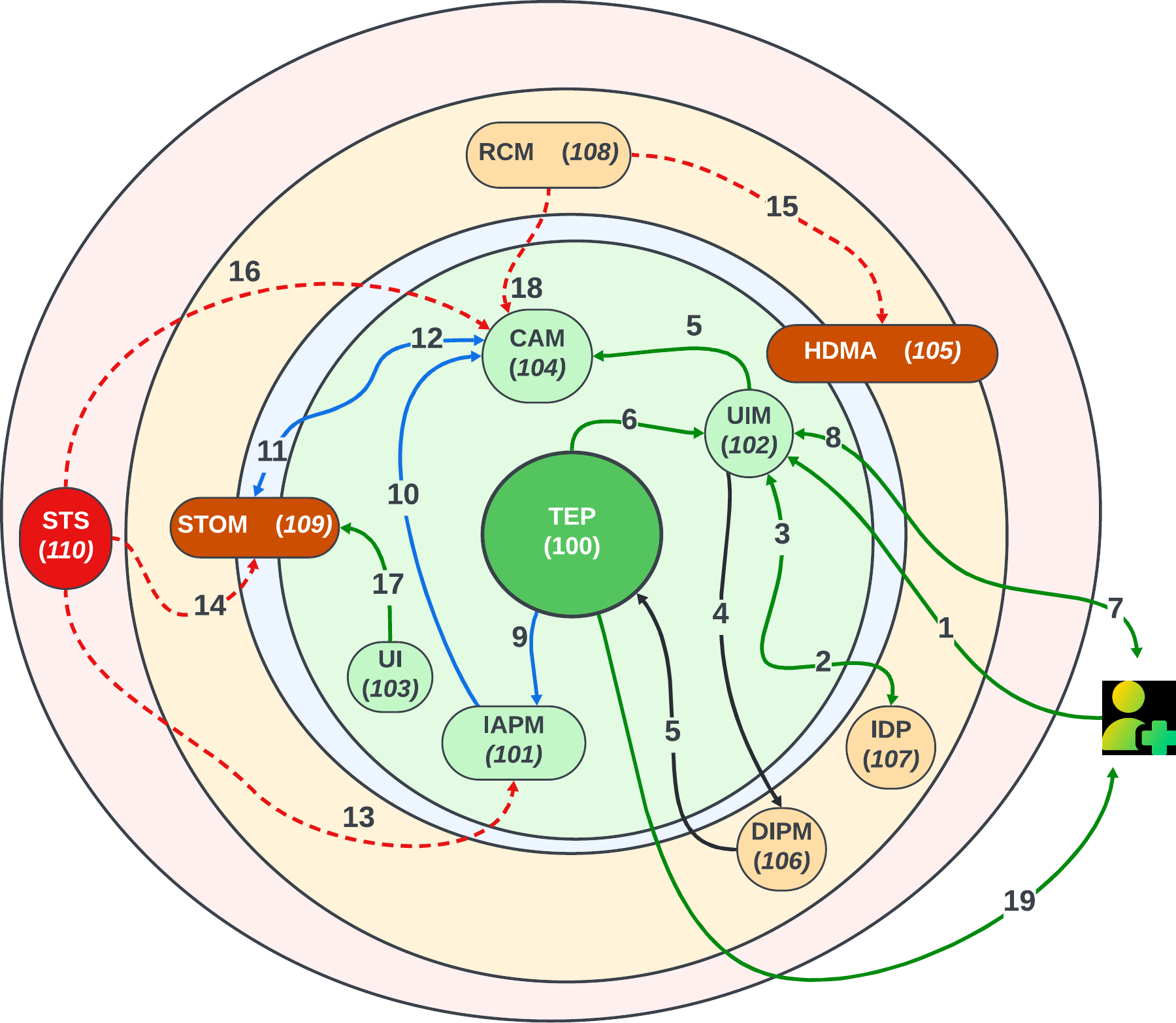 Illustration of the interaction between the system modules. ↗
Innovation Summary
An energy decision depends on more than consumption. The contract, tariff, installation and market rules also matter. This patent addresses how to bring that knowledge together to analyse the options jointly.
Acquires, aggregates and encrypts energy data; uses neural networks to detect patterns and predict consumption or generation.
Automated control using MPC and fuzzy algorithms; encrypted communications, RBAC access control and blockchain action records.
Key Benefits
- • Repeat a calculation with the same data and rules.
- • Include the sector’s rules when analysing an option.
- • Understand which data led to each result.
- • Work with energy profiles that protect the user’s identity.
- • Apply AI with knowledge specific to the energy sector.
Elements described in the application
From energy to TheryOS
These patents explain how I organise energy knowledge and turn it into decisions. At TheryOS I bring that same approach to business.
Core Characteristics
How information is organised and used to manage energy.
Tokenized Energy Profiles (TEP)
A digital profile brings together the information needed to understand a user’s energy consumption.
Distributed Architecture
The system spreads storage and processing across several components to support service continuity.
Predictive Artificial Intelligence
Uses consumption data to anticipate energy needs and compare management options.
Autonomous Management
Applies energy management decisions according to the rules defined for the system.
System Applications
From a bill to an installation: situations where connecting information helps make better decisions.
Smart Homes
- Optimization of self‑consumption and batteries.
- Automated demand response.
- Reduction of the electricity bill.
Commercial Buildings
- Centralized management of multiple supply points.
- Integration with HVAC/Building Management Systems (BMS).
- Consumption forecasting to optimize costs.
Energy Communities
- Creation of local P2P energy markets.
- Shared management of generation assets.
- Collective energy balancing.
Electric Mobility
- Smart charging for electric vehicles (V2G).
- Optimization of fleets and charging points.
- Grid integration to provide stability.
Smart Grids
- Grid congestion management.
- Flexibility and balancing services.
- Increased penetration of renewables.
Critical Infrastructure
- Supply assurance for hospitals and data centers.
- Optimization of energy resilience.
Sustainability and ESG
- Traceability of renewable energy origin.
- Carbon footprint calculation and reduction.
- Automated sustainability reports.
Energy Contracting
- Selection of the optimal electricity tariff.
- Negotiation of supply contracts (PPAs).
- Real‑time offer comparison.
- Automated invoice auditing.
Virtual Energy Advisor
- Personalized savings recommendations.
- Alerts about anomalous consumption.
- Scenario simulation (e.g., installing panels).
- Gamification to encourage efficiency.