From Integrated Energy Management to Vertical AGI: The First Patent
Patent WO2024/194517 A1 brings together information from meters, bills and installations to understand energy use.
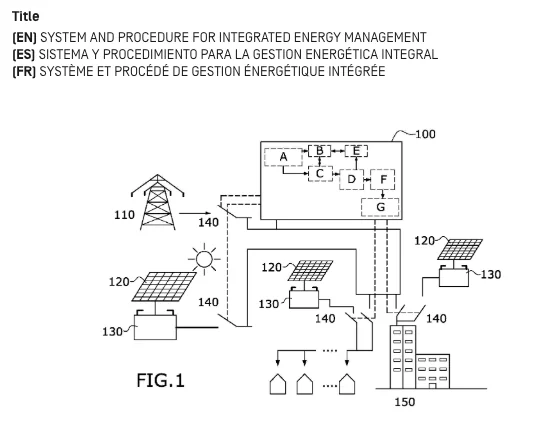
The integrated energy management system has South African patent 2025/08445, granted on 24 June 2026 to Alejandro Antonio Díaz González; its international predecessor is PCT/ES2024/070189. ZA 2025/08445.
1. The problem behind the work
An energy installation produces information in many places: meters, invoices, contracts, equipment and management systems. Running a business in this sector taught me that having those data does not mean being able to use them together to make a decision.
Patent WO2024/194517 A1 addresses that fragmentation through a proposal for integrated energy management. It describes gathering information from different sources, analysing it and making it accessible through applications and interfaces.
2. What the patent proposes
The document brings together data collection and storage, analysis using artificial intelligence, user interaction, integration with external systems and control signals for devices.
Its contribution is to place these functions within a connected framework. This allows us to study how an invoice, a measurement or a piece of equipment can contribute to understanding the same installation.
What a patent describes must be distinguished from what has been implemented and from the results verified in each application. The document sets out a technical proposal; the benefits of a deployment require their own evidence.
3. Integration raises further questions
Bringing sources together raises questions beyond storage: which supply each datum belongs to, which period it represents, which contract is current and how measurements differ from estimates.
For example, comparing an invoice with another tariff requires applying both options to the same consumption and preserving the conditions used. Missing information must remain visible. The calculation also does not replace the authorisation required to contract a change.
Integration supports analysis. A reliable decision also requires checking data, rules, limits and results.
4. The connection with my work at TheryOS
That problem remains central to what I am building: representing how an organisation works so that artificial intelligence can work with its context.
A world model relates businesses and assets to their information, contracts and rules. On that basis, a system can help compare alternatives and preserve what is needed to review a decision.
Research in Vertical AGI develops questions about capability, mandate and control within a domain. Research publications, patent descriptions and product capabilities have different scopes.
5. What remains from that first step
The idea connecting this work with the present is simple: energy knowledge should be usable as a coherent basis for decisions.
Business experience provides concrete questions. Technology helps relate information and calculate alternatives. People define objectives, approve actions within their remit and assess the consequences.
Alejandro Díaz
Founder of TheryOS, business owner and entrepreneur in the energy and financial sectors.